
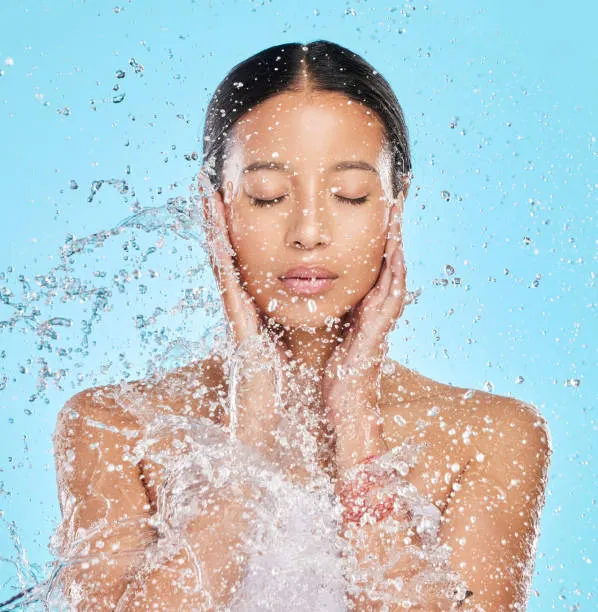
If you’ve ever wondered why your skin feels different after washing your face in Casablanca versus on holiday abroad, you’re not imagining it.
The secret lies not just in your cleanser or moisturizer, but in something much more fundamental: your tap water.
Here in Morocco, the quality and composition of our water is a crucial, yet often overlooked, skincare factor. Understanding its effects is the first step toward achieving the clear, balanced, and radiant skin you deserve.
Why is Moroccan Water “Hard”?
Most of Morocco’s water supply, especially in major cities like Casablanca, Rabat, and Marrakech, is classified as “hard water.” This means it contains high levels of dissolved minerals—primarily calcium and magnesium—which it picks up as it travels through limestone and chalk rock.
While safe to drink, these minerals interact with your skin and your skincare products in ways that can disrupt your routine.
3 Ways Hard Water Can Impact Your Skin & Hair
1. The Cleansing Conundrum: Soap Scum on Your Skin
Hard water reacts with the surfactants in cleansers and soaps, forming a sticky residue often called “soap scum.” Instead of rinsing away cleanly, this film can:
-
Leave a barrier on your skin, clogging pores and potentially leading to breakouts.
-
Disrupt your skin’s natural acid mantle, its protective barrier against bacteria and environmental stressors.
-
Causes dryness and irritation, as the residue prevents moisturizers from absorbing properly.
2. Stripping Natural Oils, Leading to Dryness & Sensitivity
The mineral deposits can be mildly abrasive and have a drying effect. Over time, frequent washing with hard water can:
-
Strip away natural lipids and oils that keep your skin hydrated and supple.
-
Compromising the skin barrier makes it more vulnerable to sensitivity, redness, and conditions like eczema or dermatitis.
-
Leave your skin feeling tight, rough, or “squeaky clean” in an unhealthy way.
3. The Rinse Fail: Product Build-Up
Hard water makes it difficult to fully rinse away products. This residue build-up isn’t just from cleansers—it can also come from shampoos, conditioners, and even leave-in treatments. This can:
-
Weigh hair down and make it look dull.
-
Scalp irritation and flakiness.
-
Reduce the efficacy of your active skincare ingredients by creating a barrier between them and your skin.
The MyClear Skincare Solution: How to Adapt Your Routine in Morocco
Don’t worry—you don’t need to move cities! A few smart adjustments to your skincare regimen can completely neutralize the effects of hard water.
Step 1: The Correct First Cleanse (The Most Important Step!)
Start with a waterless, oil-based cleanser or cleansing balm. This breaks down sunscreen, makeup, and sebum without needing to interact with hard water first. It’s a game-changer for preventing initial mineral-deposit build-up.
Our Recommendation: Look for gentle, emulsifying cleansing oils that turn milky with water.
Step 2: Use a Chelating or Gentle Second Cleanser
For your water-based cleanse, opt for a low-pH, gentle foaming or cream cleanser. Even better, use one containing mild chelating agents like Citric Acid or Phytate, which bind to the minerals in hard water and help rinse them away.
Our Tip: Avoid harsh, high-pH soaps, as they react the worst with hard water.
Step 3: Tone to Rebalance & Remove Final Residue
A good toner is non-negotiable in a hard water area. It performs two vital functions:
- Removes any final traces of mineral deposits and cleanser residue.
- Restores your skin’s optimal pH level after cleansing, prepping it to absorb the next products.
Our Recommendation: Alcohol-free toners with hydrating ingredients like hyaluronic acid or rose water (a Moroccan treasure!).
Step 4: Barrier-Repair & Intense Hydration
Since hard water can weaken your skin barrier, reinforce it!
- Serums: Incorporate serums with hyaluronic acid to bind deep hydration, and niacinamide to strengthen the barrier and reduce sensitivity.
- Moisturizers: Use creams with ceramides, fatty acids, and squalane. These mimic your skin’s natural lipids, repairing the protective shield.
Bonus Step: The Weekly Reset
Incorporate a gentle exfoliating mask or a product with AHAs/BHAs 1-2 times a week. This helps to clear away any accumulated mineral and product build-up from pores. Moroccan Rhassoul Clay is a perfect, natural option—it’s absorbent and cleansing but, unlike other clays, is naturally softens.
Practical Home Tips
- Final Rinse with Bottled or Filtered Water: For a luxury step, keep a bottle of distilled or soft filtered water to do a final splash rinse. You’ll feel the difference immediately.
- Invest in a Shower Filter: An affordable, installable filter can significantly reduce mineral content for both your skin and hair.
- Pat, Don’t Rub: After washing, gently pat your face dry with a clean, soft towel to minimize friction on potentially sensitized skin.
Have you noticed the effects of hard water on your skin? Share your experiences with us !





Thank you, we will keep posting
Repudiandae voluptas omnis voluptatem velit quas aut quia
Thank you Dena
I will send you information
Error voluptatum quam dolore harum. Qui aliquid perferendis aut recusandae iusto. Exeid fuga aspernatur est dolores. Reprehenderit dolor non tenetur aut. Et facilis alias nihil nostrum et Exercitationem perspiciatis qui sit Consequatur vel ut placeat esse aut.
Velit ut voluptas magni autem in cum quidem. Fugit cupiditate velit ad. Sed vel autem itaque libero
Voluptas voluptatem soluta laboriosam dolorem explicabo ut ad molestiae. Esse eum sapiente veniam